The Experimental Hatching Project


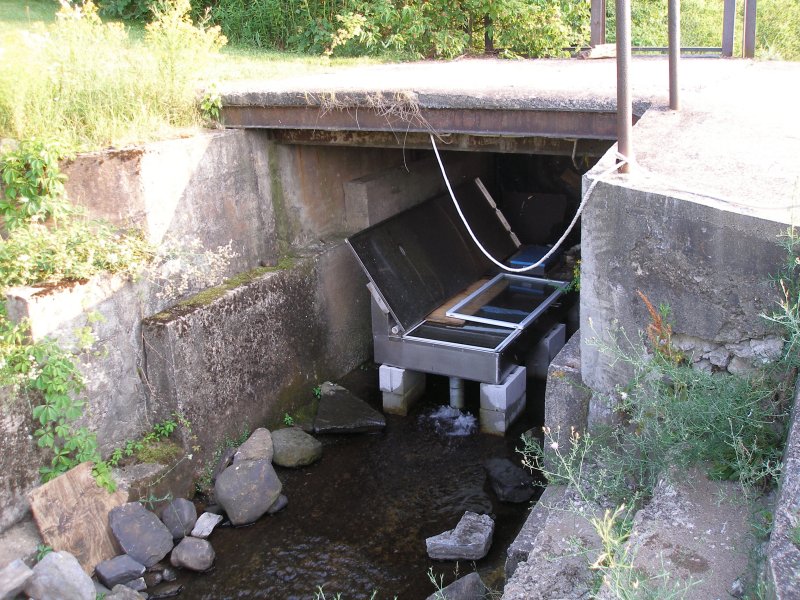
On Saturday, December 19, 2009 the club moved its spare hatching tank into the spillway of the McConnellsville dam. The club will be conducting an experiment over the winter to see if the water quality in the West Branch of Fish Creek is suitable to hatch Atlantic salmon.  About 3000 Atlantic salmon eggs will be placed in our old hatching tank which has been modified for this purpose.

The tank will be using water from the pond formed by the dam.  The flow of water will be controlled to provide about 5 gallons a minute through the tank..  

All of this is thanks to Harden Furniture, who owns the dam and the land on which we will be placing the tank.  If the experiment succeeds then we will proceed with plans to build a hatchery below the dam.  Harden is in favor of the project and has already agreed verbally to a 30 year lease.

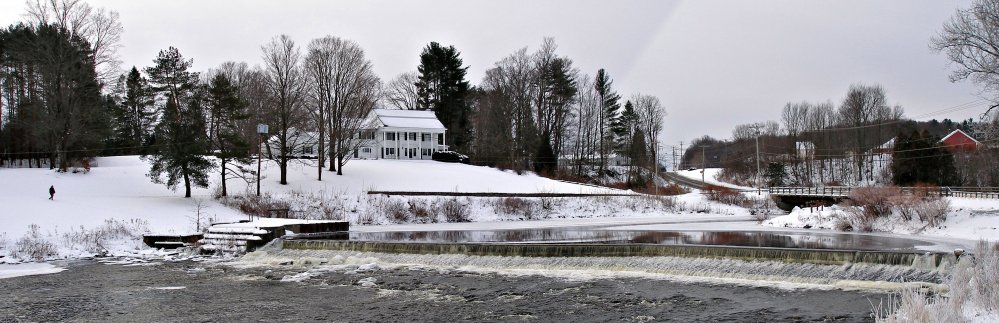
McConnellesville Dam

The spillway is to the left of the dam as shown above.  The experiment will try to determine if run off from the highways will have an effect on our fish.  Another concern that the club has is ice forming in the pipe and tank.  In this respect the nature of water may help.  

Water has the second highest specific heat of any known substance.  This means that it takes more heat to raise the temperature of water 1 degree than most other substances. Conversely, the water has to lose more heat than other substances for  the same amount of temperature drop.  Once the pond freezes over the ice covering it will act as a blanket reducing heat loss.  

When water changes state, it has to lose or gain additional heat.  Water at 32 degrees F differes from ice at 32 degrees by the amount of this heat.  This heat is called Latent Heat.  Latent heat is the amount of energy required to change a solid to a liquid without changing the temperature.  Conversely, water has to lose  this "latent heat" to become ice.

Latent Heat Diagram This  diagram shows the amount of latent heat required to change 1 gram of water from ice to liquid to vapor.   A calorie (cal) is the amount of energy required to raise the temperature of one gram of water by 1 °C.  It takes 80 calories of heat to change ice to liquid water at 0 degrees C.

 If we added another 80 calories of heat to water at 0 degrees C, that's enough heat to raise the termperature to 80 degrees C or 176 degrees F!


When a pond freezes over the water tends to stratify with the denser water at the bottom of the pond.  Water is most dense at 4 degrees C or about 39 degrees F.  In our case since we are dealing with a river, the current may have an effect on this stratification.


Spillway This is a close up of  the spillway located next to the dam in McConnellsville.  We  had to remove about 6 inches of  ice so the tank would be sitting on a solid surface.
Spillway Tom and Paul are shown with the tank in place.  The next step is to run a pipe from the timbers holding  back the water to the tank. The tank is sheltered from the weather under the deck above.

Back to Home